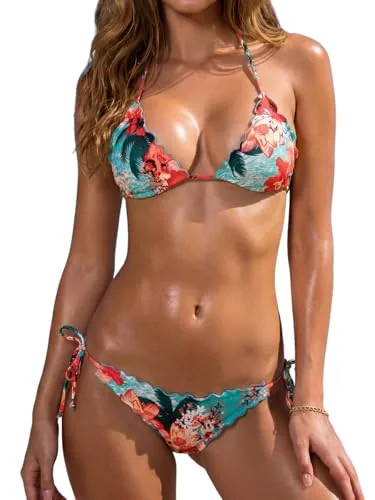
Bikini Set
Triangle Bikini Set, Blue
triangle
4.6 out of 5 · 1,906 ratings$9.99+17
A changing room tells you less than you think. Here is what actually decides whether a swimsuit fits, and all of it can be read before you order.

Swimwear is the only garment people expect to buy badly. The changing room is unflattering, the lighting is worse, and most of us settle for something that nearly works. Buying it online sounds harder and is usually easier, because at home you can measure, compare and try it against what you already own.
The catch is that a swimsuit fails differently from other clothes. A dress that is slightly wrong is still wearable. A bikini top that is slightly wrong stays in a drawer.
So this is the atelier's own checklist, in the order we would use it.
Everything else you own is mostly cotton, polyester or viscose behaving in familiar ways. Swim fabric is a knit built around one specific fibre, and understanding that fibre explains almost every fitting question that follows.
The federal rules that govern how fibres are named define it precisely.
A manufactured fiber in which the fiber-forming substance is a long chain synthetic polymer comprised of at least 85 percent of a segmented polyurethane.
That is spandex, which you will also see called elastane or Lycra. It is the fibre that lets a swimsuit stretch to nearly twice its flat measurement and then pull back. Nothing else in the fabric does that: the nylon or polyester carries the colour and the surface, and the spandex does the work.
Two consequences follow, and they run through the rest of this piece. A swimsuit will fit a wider range of bodies than its flat measurement suggests. And when the spandex goes, the suit is finished, no matter how good the rest of it looks.
Take these with a soft tape, standing normally, and write them on your phone. They stay useful for years.
One optional extra is worth the minute it takes: the torso loop, measured from the shoulder, down through the crotch and back up. It is the measurement that decides whether a one piece fits a long body, and it is the reason a one piece that fits everywhere else can still pull uncomfortably at the shoulder.
Every swimwear description in the world says it is supportive. The word means nothing on its own. Support is a physical property and you can read it from four features.
| Feature | What it does | Holds |
|---|---|---|
| Underwire | A rigid frame under each cup that carries the bust from below | Most |
| Moulded cup | A pre-shaped cup that holds its form off the body | A lot |
| Wide underband | Spreads load across the ribcage rather than the shoulders | A lot |
| Halter tie | Takes weight at the back of the neck, adjustable on the day | Some |
| Thick strap | Spreads load across the shoulder | Some |
| String tie | Sets position only | Almost none |
Read a top for those features and ignore the adjectives. A string triangle with thin ties is not going to hold a larger bust however the description is written, and an underwire top will, even in a photograph that makes it look delicate.
The vocabulary around swim bottoms sounds like marketing and is not. Each term describes a real amount of fabric, and they are used consistently enough across the industry to be useful.
Rise is the measurement people forget. A high waisted bottom sits at or above the navel and holds its position through movement. A low rise bottom sits on the hip and will move. Both are legitimate. They are not interchangeable.
Counted from our own pieces on the date below, not estimated.
| Cut | Pieces | Department | What it covers | From |
|---|---|---|---|---|
| Bikini Set | 161 | Bikini Sets | a top and a bottom that already agree | $8.49 |
| Bikini Bottom | 138 | Swim Bottoms | the half most people size separately | $7.49 |
| One Piece | 83 | One-Piece Swimsuits | the midriff, and nothing to adjust | $26.99 |
| Bikini Top | 83 | Swim Tops | the half that has to hold | $12.99 |
| Tankini | 68 | Tankinis | the midriff, with the bottom still separate | $12.59 |
| Rash Guard | 33 | Cover-Ups and Long Sleeve | the shoulders, through a whole day out | $29.99 |
| Board Shorts | 10 | Swim Bottoms | the upper thigh, with a brief built in | $19.99 |
| Cover Up | 8 | Cover-Ups and Long Sleeve | the walk down and the lunch after | $16.19 |
The useful reading of that table is the second column. A cut with a lot of pieces behind it will have your size and something close to your colour. A cut with a handful is a shortlist rather than a range, and worth deciding on quickly.
This is the single most effective thing you can do, and it takes four minutes.
Letter sizes travel badly between brands. Flat measurements do not travel at all, which is exactly why they are trustworthy. Where a maker publishes a measurement for a piece, it is on the card here.
For the pieces where nobody publishes one, the comparison above is the tool to reach for. The Swim Tops and Swim Bottoms departments exist partly for this: buying the halves separately means one flat measurement has to match instead of two.
One line most people skip decides whether the suit still fits next summer. Care instructions are regulated, and the rule is strict about whoever prints a care claim having a basis for it.
To fail to possess, prior to sale, a reasonable basis for all regular care information disclosed to the purchaser.
So read a care label as information rather than as a warning. Hand wash means the fabric will not survive a machine. Do not tumble dry means heat will destroy the spandex, and with it the fit. Those are statements about the limits of the product, made by the people who made it.
Try it on dry, in daylight, before anything else. Then do three specific things rather than looking in the mirror and hoping.
None of those tests needs water and all three predict what happens in it. Returns are handled at checkout by our retail partner rather than by us, so their window is the one that counts, and it is worth doing these three things on the day it arrives rather than the day before the holiday.
Every cut has one predictable failure. Knowing it in advance turns a disappointment into a decision.
It carries almost nothing, and the ties loosen when they are wet. On a lounger it is the most comfortable thing in the range and leaves the fewest marks. In surf it is the least reliable. Both statements are true at once. That is what makes it the most popular cut we make and the one that generates the most complaints.
It slips. There is no honest way around it: a band of fabric held by tension alone will move when you do. A bandeau with a detachable halter strap solves the problem completely and several here have one, which is worth looking for if you plan to be in the water rather than beside it.
It holds better than anything else and it is the least forgiving on size. An underwire that sits on breast tissue rather than on the ribcage will hurt within an hour, and no amount of strap adjustment fixes it. This is the cut where the flat measurement comparison matters most.
The torso length catches people out. A one piece that fits at the bust and the hip can still pull at the shoulder on a long body, and there is nothing to adjust. It is also the cut you cannot partly remove, which matters more on a long day than it sounds.
It floats. A tankini top that is cut generously will lift in water and sit around the ribs, which defeats the purpose of the coverage you bought it for. The ones that work end at or just past the hip bone and skim rather than hang.
Colour is mostly preference, with a single practical exception worth knowing.
Pale fabric goes translucent when it is wet. That is physics rather than a quality difference: water fills the spaces in the knit and light passes through. White, nude, pale grey and the lighter pastels all do it, and the thinner the fabric the more they do.
The fix is a full lining, and a piece that has one usually says so. Pale pieces here go under water before they join the range, which is a crude test that catches the obvious failures, and the obvious failures are most of them.
Everything else is yours to choose. If you want to move through the range by shade rather than by cut, the colour map on the home page does that in one screen.
If the budget only stretches to one considered piece, make it the one that has to hold. A cheap bottom in a good cut is a perfectly good bottom. A cheap top with no structure is a top you will not swim in.
The rest of the wardrobe can be colour and mood. The piece doing structural work is the one where a moulded cup, a wide band and a proper underwire are worth the difference, and where you feel it every hour you wear it.
Where this came from
Office of the Federal Register
16 CFR Part 303, Rules under the Textile Fiber Products Identification Act
Office of the Federal Register
16 CFR Part 423, Care Labeling of Textile Wearing Apparel
Every source above was opened and read on the date shown. Where a page says something we cannot verify ourselves, we quote it and name it rather than restating it as our own.
Shop what this piece is about
triangle
4.6 out of 5 · 1,906 ratings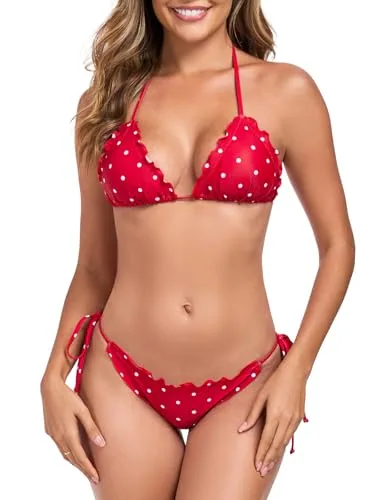
triangle
4.6 out of 5 · 1,906 ratings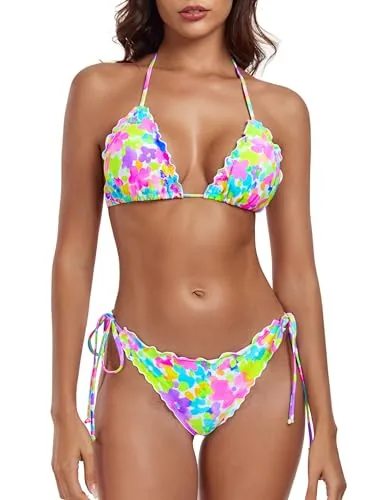
triangle
4.6 out of 5 · 1,906 ratingstriangle
4.6 out of 5 · 1,906 ratingsKeep reading

Swimwear does not wear out. It is destroyed, by four things in a specific order, and three of them are avoidable in under five minutes.
1,615 words
Twenty terms that appear on every swimwear description, what each one actually describes, and which of them mean nothing at all.
1,608 words